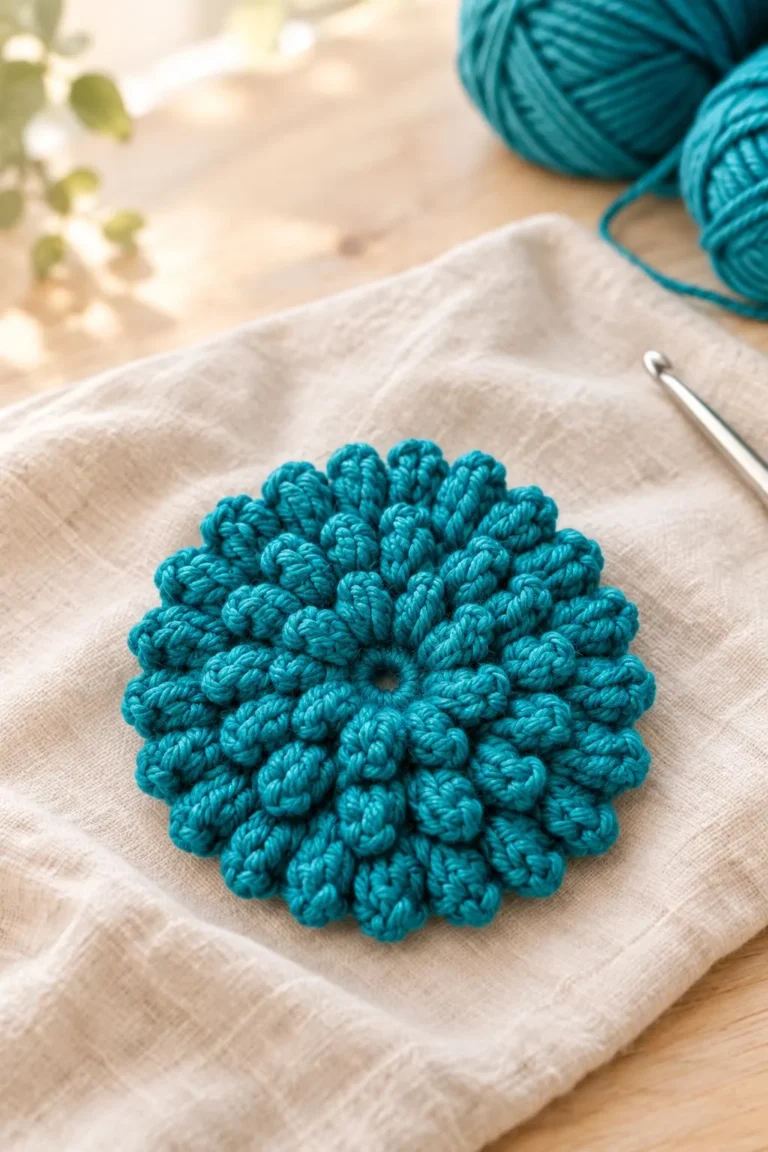
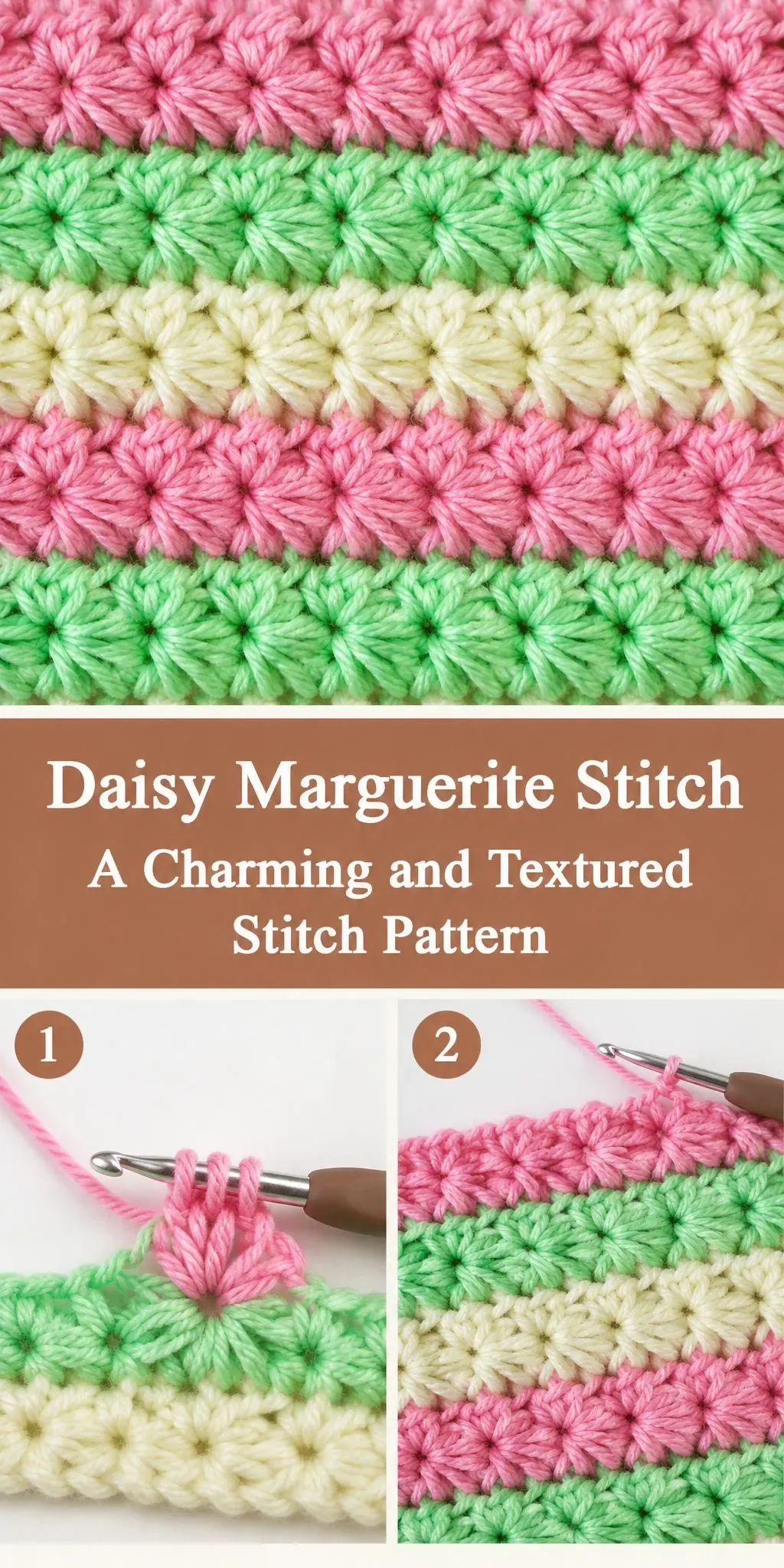
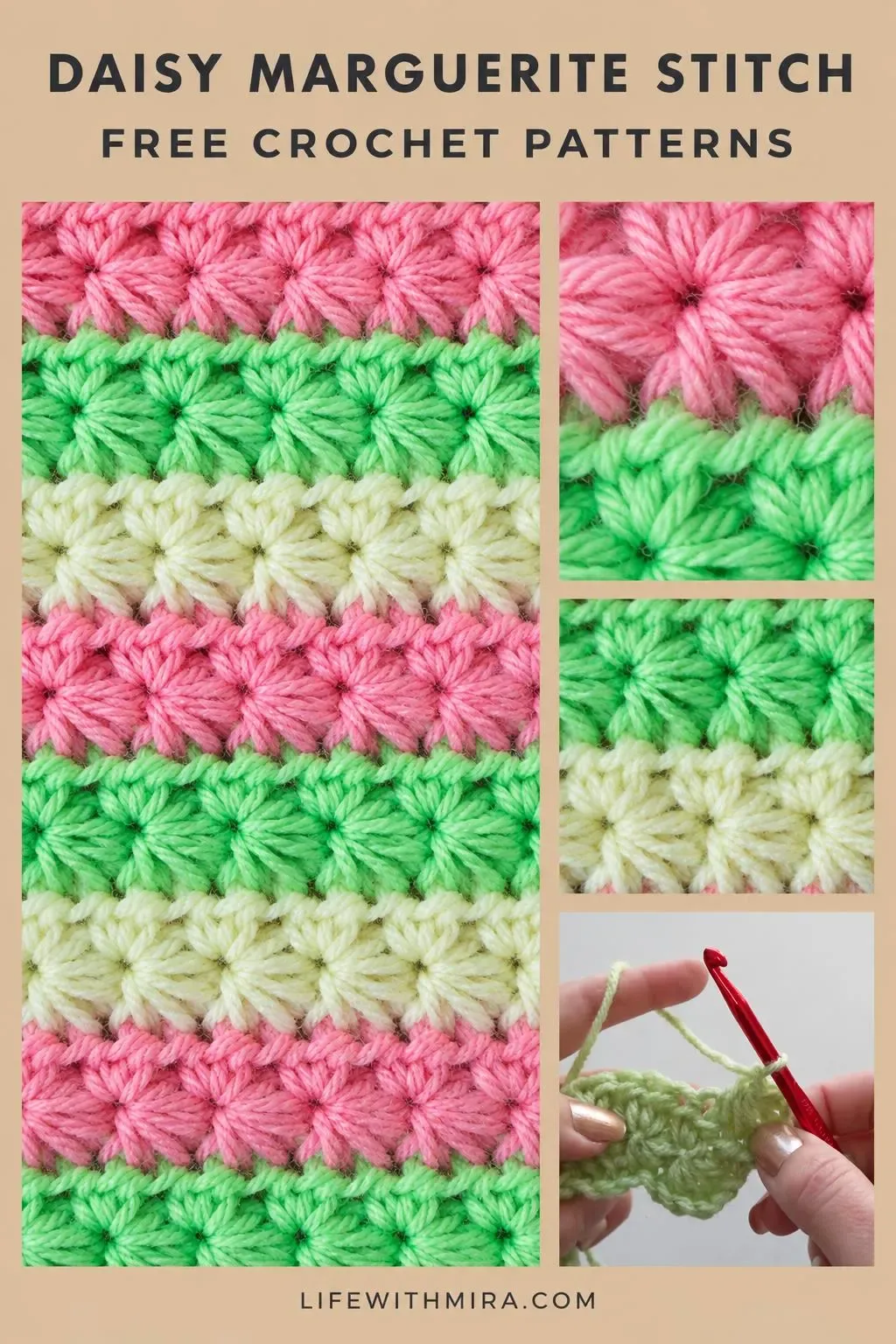
Welcome! Today we’re making the lovely Crochet Daisy Marguerite Stitch, a textured pattern that looks like a row of little flowers.
The Crochet Daisy Marguerite Stitch gets its charm from its rounded, flower-like clusters. Each one pops up from the fabric, so the whole piece feels soft and dimensional. Stripes of colour make the texture even easier to see.
This stitch suits blankets, baby throws, dishcloths and cosy cushion covers. It is a lovely choice when you want something that feels special but still grows steadily row by row. The full step-by-step tutorial is in the video, and this page helps you prepare and crochet with confidence.
In this post
Skill Level
Intermediate. The clusters are built from several loops worked into the same stitch, and you need to keep your tension even so the flowers sit evenly across each row.
Marguerite Stitch Related Posts:
- Crochet Shrug Cardigan: A Cozy and Trendy Handmade Staple
- Crochet Beachy Keen Shawl: A Fresh and Airy Wardrobe Favorite
- Crochet Mesh Tote Bag: A Light and Airy Everyday Essential
- Crochet Cropped Triangle Top: A Charming and Versatile Handmade Essential
Materials
- Yarn: a worsted weight (medium, category 4) acrylic or cotton blend works beautifully. Its smooth plies show the flower shapes clearly, and it is easy to wash.
- Hook: a size G/6 (4 mm) or H/8 (5 mm) hook is a common choice for worsted yarn. Go up a size if your clusters look tight.
- Scissors, plus a yarn or tapestry needle for weaving in ends.
- Stitch markers, helpful for keeping track of the start of each row.
Stitches and Abbreviations
- ch: chain. Yarn over and pull through the loop on your hook to make a foundation loop.
- sc: single crochet. Insert the hook, yarn over, pull up a loop, then yarn over and pull through both loops.
- dc: double crochet. Yarn over, insert, pull up a loop, then work off two loops twice.
- sl st: slip stitch. Insert the hook, yarn over, and pull through both the stitch and the loop on the hook.
Pattern Notes
- This page uses US crochet terms.
- The flower clusters are the key to the texture, so take your time with each one.
- Keep your tension relaxed so the clusters open up rather than squeezing together.
- The size of your finished piece can be adjusted by changing your foundation chain length.
- Edges may look a little uneven before blocking, and that is perfectly normal.
How It’s Made
- Foundation: you start with a chain that sets the width of the piece.
- Base rows: a few simple rows create a stable fabric for the flowers.
- Flower clusters: each cluster is built from several loops worked into one stitch, forming the daisy shape.
- Colour changes: stripes are worked by changing yarn at the end of rows, which creates the striped effect.
- Repeating rows: the clusters are repeated across each row and built up row by row.
- Edging: a neat border finishes the sides and keeps the flowers in line.
- Finishing: ends are woven in and the piece is blocked to even out the texture.
For the exact rounds and stitch counts, follow along with the video tutorial.
Assembly and Finishing Tips
Count your clusters at the end of each row so the stripes stay even. This helps the flower lines look neat from one edge to the other.
Weave in your ends as you go, rather than leaving them all until the end. It saves time and keeps the back tidy.
Block your finished piece gently. Pinning it to shape helps the clusters open up and sit evenly.
If you are making a blanket, check that your edges stay straight by counting stitches every few rows.
Make It Yours
Try soft pastels like pink, lilac and cream for a gentle nursery throw. Bright sunny colours suit a summer cushion cover. Use a contrasting edging in a deeper shade to frame the flowers. You could also make a matching set of dishcloths as a thoughtful handmade gift.
Happy crocheting! Share your finished Crochet Daisy Marguerite Stitch project with us, we would love to see how your flowers come out.
Follow us on Pinterest and subscribe to the Newsletter so you don’t miss a thing!
Tutorial and photos of this daisy marguerite stitch by: naztazia.